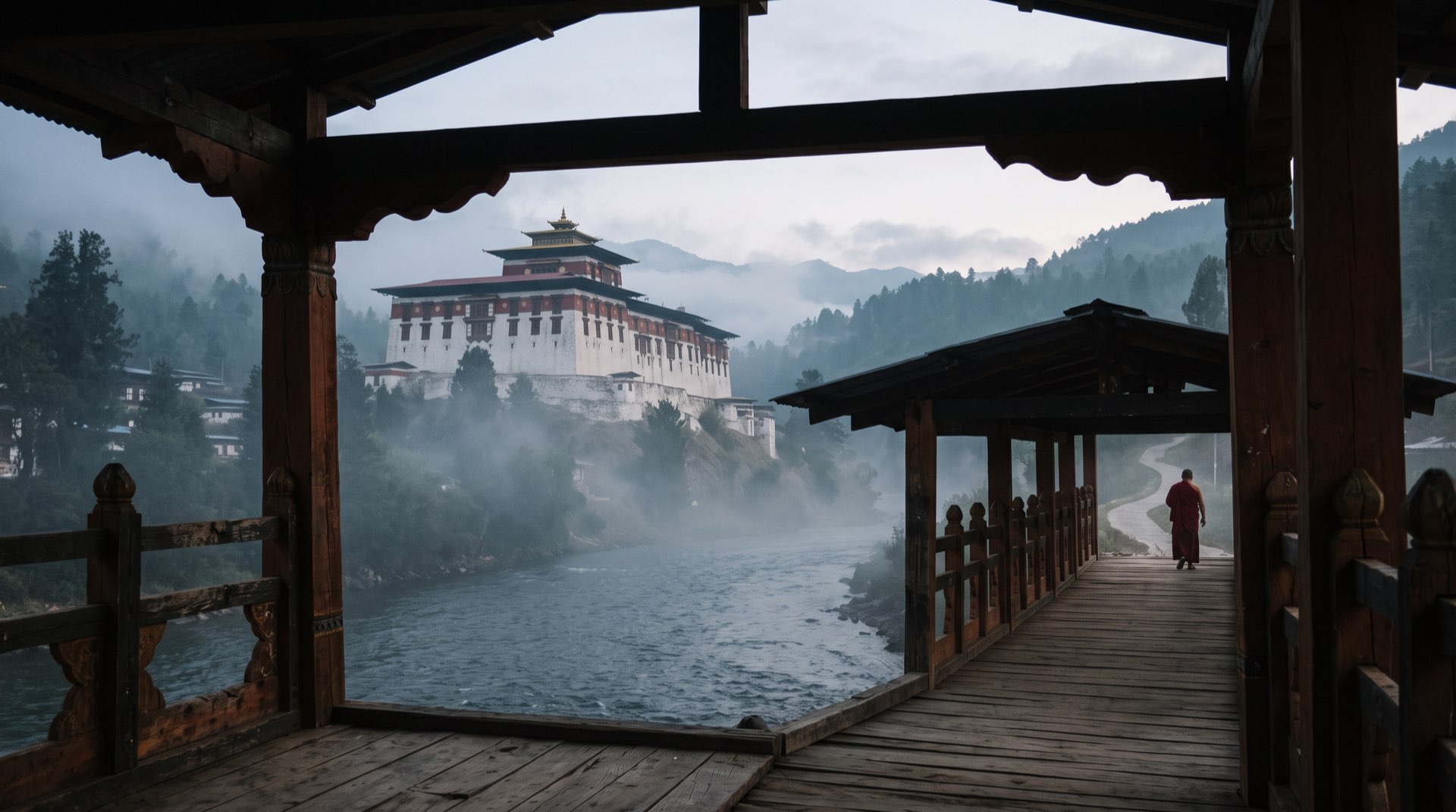
Picture two courtyards, about six months apart. In the first, a crowd stands in the March dark, cold-nosed and quiet, waiting for a sacred scroll to be unfurled down a dzong wall before the sun reaches it. In the second, thousands of people in their finest clothes gather at Tendrelthang, inside Tashichho Dzong in Thimphu, and, as BBS reported of the 2024 festival, they brave a drizzle and then the sun in the same day.
Both are extraordinary. Both are also, for most people, a choice, because you probably have one trip and a limited number of mornings. So here is a rule for choosing, built on the published tentative dates, the weather records and what Bhutan’s national broadcaster has reported.
| At a glance | Detail | Source |
|---|---|---|
| Paro Tshechu | 29 March–2 April 2026; 18–22 March 2027; Rinpung Dzong; thongdrel on the last day | 2026 list, 2027 list |
| Thimphu Tshechu | 21–23 September 2026; 10–12 October 2027; Tashichho Dzong; no thongdrel marked | 2026 list, 2027 list |
| Length | Paro five days; Thimphu three | BBS on Paro, 2026, BBS on Thimphu, 2024 |
| Crowds | Paro’s festival ground holds about 20,000; BBS reported crowds outgrowing it again in 2026 | BBS, 6 May 2026 |
| Weather | Paro in March: average high 18 °C, low 4 °C. Thimphu in October: 24 °C and 9 °C | NCHM Climate Data Book |
| Checked | 30 September 2026 |
Which is better, Paro Tshechu or Thimphu Tshechu?
Neither; they suit different seasons and different appetites. Paro Tshechu is a spring festival of five days that ends with a thongdrel at dawn and fills a valley you are probably landing in anyway. Thimphu Tshechu is an autumn festival of three days, held in the capital, with no thongdrel marked on the published lists.
That sounds like a small difference. It is not. One rewards a pre-dawn alarm and warm layers; the other lets you sleep a little longer and spend the day in the sun, or the drizzle. What you watch is much the same: both are tshechus, festivals of sacred masked dances called cham. On day one of Thimphu’s 2024 festival, BBS reported, the dances included Pholay Molay, Zhana Cham and the renowned Drametse Nga Cham.
The sections below give the reasons, so you can disagree with us on good evidence, and the last one turns them into three questions.
When are they in 2026 and 2027?
Paro Tshechu is 18–22 March in 2027 and Thimphu Tshechu is 10–12 October, according to the tentative lists on the Department of Tourism’s website.
| Paro Tshechu | Thimphu Tshechu | |
|---|---|---|
| 2026 | 29 March–2 April | 21–23 September |
| 2027 | 18–22 March | 10–12 October |
| Change | 11 days earlier | 19 days later |
| Venue | Rinpung Dzong | Tashichho Dzong |
| Thongdrel | Last day | None marked |
The lists give Paro five days in both years and Thimphu three, matching what BBS describes. Both 2026 festivals have passed, Thimphu’s a week ago. The 2027 list also carries the Thimphu Drubchen, the ritual that comes before the tshechu, on 5 October. The lists are tentative and follow the lunar calendar, which is why one festival moves earlier and the other later. Our guide to Bhutan's festival dates for 2027 has the full list and the reason, and Bhutan’s festivals helps you choose among all of them.
What is the thongdrel, and which festival has one?
A thongdrel is a giant appliqué thangka, a sacred image made of cloth, that a handful of festivals unveil once a year on the final morning. At Paro, a 2013 BBS report describes it displayed in the early hours and folded away before sunrise, with thousands gathering before dawn to receive its blessings.
Both lists mark the last day of Paro Tshechu with a thongdrel. Neither marks one for Thimphu. That is an absence in a list, not a statement in a book, so if a thongdrel is the whole reason you are coming, ask us to confirm it for your dates. There is a neat autumn workaround: Gangtey Tshechu, on 13–15 October 2027, is marked with a thongdrel on its last day, and it begins the day after Thimphu’s ends.
What is the weather like in March versus autumn?
Paro in March is cold at dawn and mild by afternoon, with little rain; Thimphu in October is milder at night, wetter than March but far drier than September.
| Station and month | Daytime high | Night-time low | Rain in the month |
|---|---|---|---|
| Paro, March | 18 °C | 4 °C | 22 mm |
| Thimphu, September | 26 °C | 15 °C | 74 mm |
| Thimphu, October | 24 °C | 9 °C | 43 mm |
These are our averages of the monthly means in the National Centre for Hydrology and Meteorology’s Climate Data Book, for 1996–2017, at its Paro and Thimphu (Simtokha) stations. They are averages of whole months, and a pre-dawn wait sits near the low end. Thimphu’s 2026 festival, on 21–23 September, sat in the wetter month; the 2027 move to mid-October takes it out of the tail of the rains, with nights about six degrees cooler. BBS reported drizzle on day one of the 2024 festival in mid-September. If you are choosing on warmth alone, Thimphu in October wins; on dryness alone, Paro in March does. Pack layers for either.
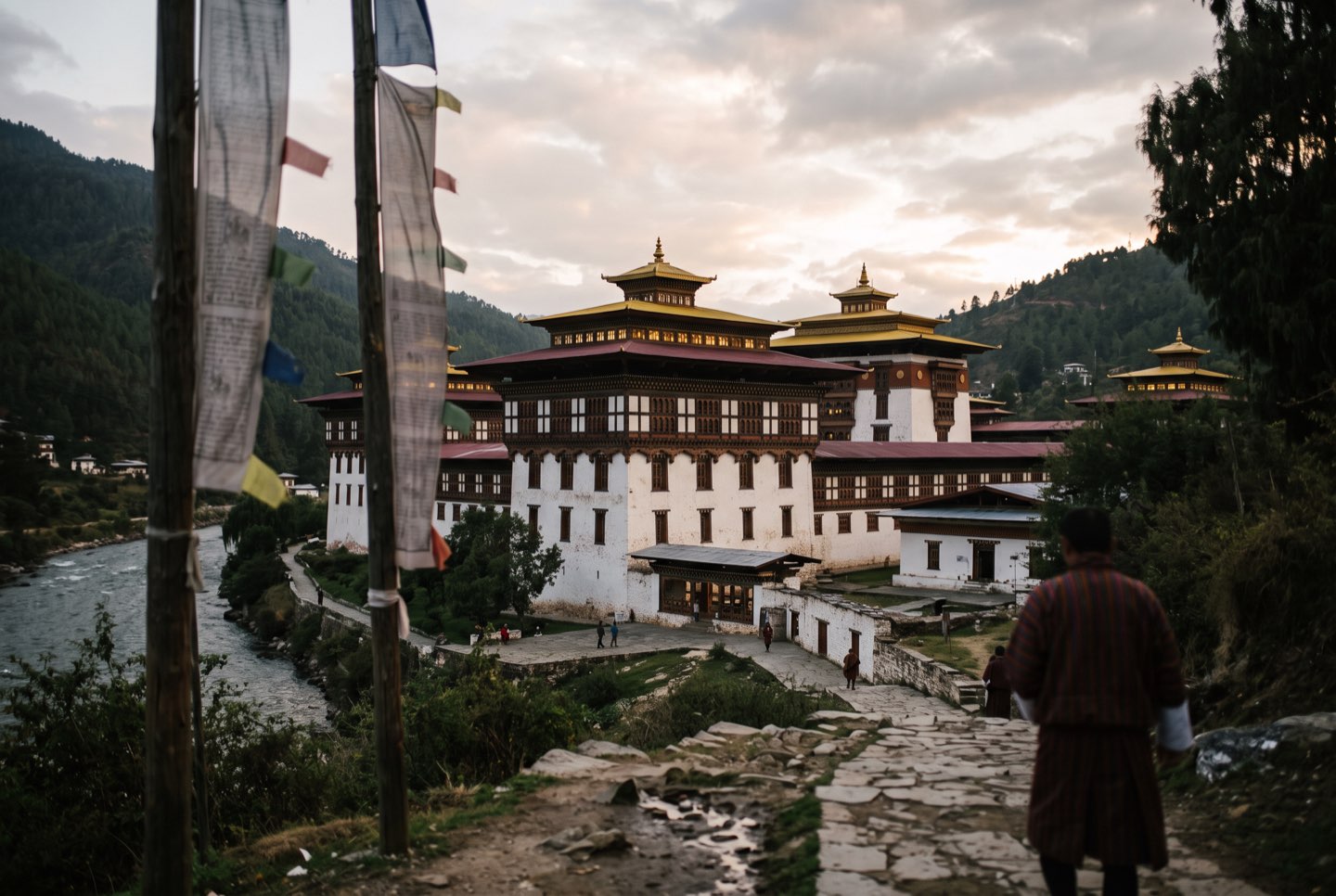 Tashichho Dzong in Thimphu at dusk, its golden roofs lit and prayer flags at the edge of the frame.
What else fits into the same week?
In Paro, the valley itself. Four other festivals start on 16 March 2027, two days before Paro Tshechu begins, but they are in other districts, so treat them as a different trip. The nearby anchor is the Tiger’s Nest hike, which takes 5–6 hours return, so we plan it for a day when you are not up before dawn.
In autumn, the neighbours are richer. The 2027 list has Wangdue Tshechu on 8–10 October, Tamshing Phala Chhoepa in Bumthang on 10–12, Gangtey Tshechu on 13–15, the Jhomolhari Mountain Festival at Dangochong on 14–15 and Thangbi Mewang in Bumthang on 15–16. A journey can string two or three together. In spring 2026 the Haa Spring Festival followed Paro within days, but the 2027 list does not carry it, so ask us before building a plan around it.
Which suits photographers, families and first-timers?
Photographers should know that the thongdrel is displayed in the early hours, before sunrise, when the light is low and thousands are gathered. Thimphu’s dances run in daylight. At both, keep cameras out of sacred spaces and lower them when people are praying; our guide to dzong and temple etiquette covers the details.
Families will find Thimphu’s three days easier to dip into. At Paro, BBS reported in 2026 that only some spectators found a place in the seating gallery and others sat on the hillside above the ground, so bring a cushion, snacks and patience either way.
First-timers should choose by season before choosing by festival. If March suits your diary, Paro puts the festival in the valley where you land. If October does, Thimphu puts it in the capital, with clear skies around it. Either is a fine first festival.
How do you decide? Three questions
Ask yourself three things, and the answer usually appears before you reach the third.
- Which season would you travel in anyway? March means spring and cold mornings; October means clear skies and warm nights. Pick the season and the festival follows.
- Do you want the dawn thongdrel? Then Paro, or Thimphu paired with Gangtey.
- How do you feel about an alarm before dawn? If the answer is “strongly”, Thimphu is kinder.
Still torn? Tell us the month you are free and we will do the rest: the festival, the lodges and, if you choose Paro, the alarm clock. Our The Soul of Western Bhutan journey passes through both valleys, and we set the days around the festival you pick.
Frequently asked questions
Can I do both in one trip?
Not in 2027. Paro is 18–22 March and Thimphu is 10–12 October, almost seven months apart, and 2026 was the same. What you can do is pair each with a neighbour: Thimphu with Gangtey, or Paro with the western valleys.
How many days should I allow?
For Paro, two days at least: a middle day for the dances and the last dawn for the thongdrel. For Thimphu, we would give the festival one full day and add a second if you want to sit and watch slowly.
Which is less crowded?
We could not find a published head-count comparing them, so we will not name a winner. BBS reports crowds outgrowing Paro’s ground, which holds about 20,000, in 2026, and thousands at Thimphu on day one in 2024. See Bhutan’s crowds in 2026 for the wider picture.
Is the Paro festival near the Tiger’s Nest?
Both are in the Paro valley, so one journey can hold both, but not on the same day. Festival mornings begin early and the hike needs most of a day, so we put them on different days.
Choose the season you would love anyway, then let the festival be the reason to wake up early in it.