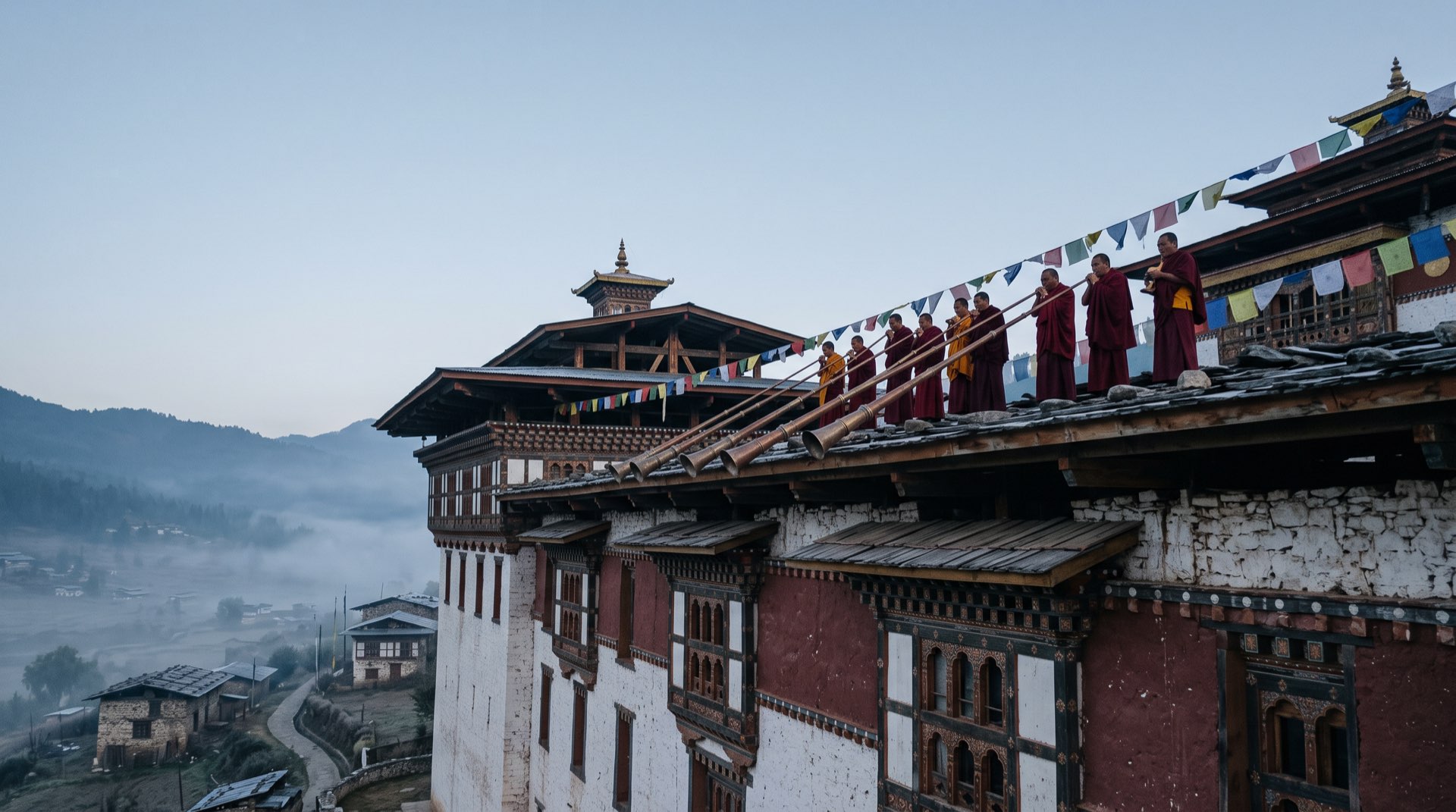
Before dawn on the last morning of the Paro festival, an enormous sacred scroll is unfurled on the dzong wall and folded away again before the sun can touch it. Thousands of people wait for it in the March dark. In 2027, that morning is Monday 22 March.
Or so says a two-page PDF on the Department of Tourism’s travel-trade page, which is a shame, because a table locked in a PDF is hard to search, hard to quote and impossible to read on a phone in the back of a taxi. So here it is, typed out: all 44 entries in date order, checked row by row against the file, with what has moved since 2026.
| At a glance | Detail | Source |
|---|---|---|
| The list | 44 entries, marked as updated on 14 February 2025; the PDF carries the logos of both the Department of Tourism and the Association of Bhutanese Tour Operators | 2027 list |
| Headline dates | Paro Tshechu 18–22 March; Thimphu Tshechu 10–12 October; Jambay Lhakhang Drup 14–17 November | 2027 list |
| Not the whole year | Bhutan holds more than 160 festivals a year; the list is a selection | Department of Tourism |
| Why dates move | Tshechu dates vary each year with the lunar calendar | National tourism events calendar |
| 2026 comparison | 47 entries, marked as updated in April 2025; hosted by the Department, on a letterhead of the Association of Bhutanese Tour Operators | 2026 list |
| The fee | The US$100 SDF rate runs to 31 August 2027; no later rate announced | BBS, 6 September 2026 |
| Checked | 30 September 2026 |
What are the 2027 festival dates?
The tentative list has 44 entries, from 11 February 2027 to 14 January 2028. Here they are in date order, with dates exactly as the PDF prints them. We have tidied place-name spellings and sorted the rows, because the PDF puts Haa Tshechu, in November, among the October ones.
| Festival | Dates (tentative) | Where |
|---|---|---|
| Lhamoi Dromchhen | 11–13 February | Trongsa Dzong, Trongsa |
| Punakha Dromchoe | 13–15 February | Punakha Dzong, Punakha |
| Punakha Tshechu | 16–18 February | Punakha Dzong, Punakha |
| Tharpaling Thongdrol | 20 February | Tharpaling Lhakhang, Chumi, Bumthang |
| Chhorten Kora | 20 February and 8 March | Chorten Kora, Trashiyangtse |
| Tangsibi Mani | 22–24 February | Tangsibi Lhakhang, Ura, Bumthang |
| Gomphukora | 16–18 March | Gom Kora Lhakhang, Trashiyangtse |
| Talo Tshechu | 16–18 March | Talo Gonpa, Punakha |
| Gasa Tshechu | 16–18 March | Gasa Dzong, Gasa |
| Zhemgang Tshechu | 16–18 March | Zhemgang Dzong, Zhemgang |
| Paro Tshechu | 18–22 March (thongdrel on the last day) | Rinpung Dzong, Paro |
| Rhododendron Week | 3–9 April | Shetemey, Merak, Trashigang |
| Domkhar Tshechu | 16–18 April | Domkhar, Chumi, Bumthang |
| Ura Yakchoe | 18–22 April | Ura Lhakhang, Bumthang |
| Rhododendron Festival | 22–23 April | Lamperi Botanical Park |
| Nimalung Tshechu | 12–14 June | Nimalung Dratshang, Chumi, Bumthang |
| Kurjey Tshechu | 14 June | Kurjey Lhakhang, Choekhor, Bumthang |
| Tour of the Dragon (mountain bike race) | 5 September | Bumthang to Thimphu |
| Thimphu Drubchen | 5 October | Tashichho Dzong, Thimphu |
| Wangdue Tshechu | 8–10 October | Wangduephodrang |
| Tamshing Phala Chhoepa | 10–12 October | Tamshing Lhakhang, Bumthang |
| Thimphu Tshechu | 10–12 October | Tashichho Dzong, Thimphu |
| Gangtey Tshechu | 13–15 October (thongdrel on the last day) | Gangtey Gonpa, Wangduephodrang |
| Jhomolhari Mountain Festival | 14–15 October | Dangochong, Thimphu |
| Thangbi Mewang | 15–16 October | Thangbi Lhakhang, Choekhor, Bumthang |
| Haa Tshechu | 6–8 November | Lhakhang Karpo, Haa |
| Chhukha Tshechu | 6–8 November | Chhukha Dzong, Chhukha |
| Pemagatshel Tshechu | 6–9 November (thongdrel on the last day) | Pemagatshel Dzong, Pemagatshel |
| Jakar Tshechu | 6–9 November | Jakar Dzong, Choekhor, Bumthang |
| Dechenphu Tshechu | 8 November | Dechenphu Lhakhang, Thimphu |
| Black-necked Crane Festival | 11 November | Gangtey Gonpa, Phobjikha, Wangduephodrang |
| Jambay Lhakhang Drup | 14–17 November | Jambay Lhakhang, Choekhor, Bumthang |
| Prakhar Duchhoed | 15–17 November | Prakar Lhakhang, Chumi, Bumthang |
| Goenpai Drupchen | 3–5 December | Trongsa Dzong, Trongsa |
| Mongar Tshechu | 6–8 December | Mongar Dzong, Mongar |
| Phuntsholing Tshechu | 6–8 December | Phuntsholing, Chhukha |
| Trashigang Tshechu | 7–9 December | Trashigang Dzong, Trashigang |
| Jambay Lhakhang Singye Cham | 13 December | Jambay Lhakhang, Choekhor, Bumthang |
| Druk Wangyel Tshechu | 13 December | Dochula, Thimphu |
| Nalakhar Tshechu | 13–15 December | Ngaa Lhakhang, Choekhor, Bumthang |
| Trongsa Tshechu | 5–9 January 2028 (thongdrel on the last day) | Trongsa Dzong, Trongsa |
| Lhuentse Tshechu | 5–9 January 2028 (thongdrel on the last day) | Lhuentse Dzong, Lhuentse |
| Samdrupjongkhar Tshechu | 10–12 January 2028 | Samdrupjongkhar |
| Nabji Lhakhang Drup | 12–14 January 2028 | Nabji Lhakhang, Nabji, Trongsa |
Before you copy a date: Chhorten Kora is one entry with two dates, and four entries are not religious festivals at all (two rhododendron events, the Tour of the Dragon bike race and the Jhomolhari Mountain Festival). We have left the district off Lamperi Botanical Park, because the 2027 list says Thimphu while the 2026 national events calendar says Punakha. And 44 is not the whole year, so plenty of local festivals are not here.
How do the 2027 dates compare with 2026?
Festivals from February to June arrive about ten or eleven days earlier in 2027, and from October they arrive eighteen or nineteen days later.
| Festival | 2026 | 2027 | Shift |
|---|---|---|---|
| Punakha Tshechu | 27 February–1 March | 16–18 February | 11 days earlier |
| Paro Tshechu | 29 March–2 April | 18–22 March | 11 days earlier |
| Thimphu Tshechu | 21–23 September | 10–12 October | 19 days later |
| Gangtey Tshechu | 24–26 September | 13–15 October | 19 days later |
| Jakar Tshechu | 18–21 October | 6–9 November | 19 days later |
| Jambay Lhakhang Drup | 26–29 October | 14–17 November | 19 days later |
| Black-necked Crane Festival | 11 November | 11 November | no change |
| Trongsa Tshechu | 17–21 December 2026 | 5–9 January 2028 | 19 days later, into 2028 |
That is the fingerprint of a lunar calendar catching up with the sun: twelve lunar months fall about eleven days short of a solar year, so dates drift earlier until an extra month is added, then jump later. This is our reading of the arithmetic, not something the Department states.
Four entries stay put because they are not lunar: the Tour of the Dragon (5 September), the Jhomolhari Mountain Festival (14–15 October), the Crane Festival and the Druk Wangyel Tshechu at Dochula (13 December). Four 2026 entries do not reappear, all Haa festivals: the Haa Spring Festival, App Chundu Lhasel and two Rongtse Nye events. Missing from a tentative list does not mean cancelled, so ask. And Trongsa and Lhuentse slip past New Year: on these lists neither holds a tshechu in calendar 2027.
Which festivals fall in the same week?
Three windows are crowded. From 8 to 16 October, six festivals overlap: Wangdue, Thimphu, Tamshing Phala Chhoepa, Gangtey, the Jhomolhari Mountain Festival and Thangbi Mewang. Thimphu’s ends the day before Gangtey’s begins, a natural pair. To choose between the capital and the west’s great festival, read Paro Tshechu or Thimphu Tshechu.
From 6 to 17 November, eight entries fall inside twelve days. Jakar, Haa, Chhukha and Pemagatshel all start on the 6th, the Crane Festival is on the 11th, then Jambay Lhakhang Drup and Prakhar Duchhoed follow in Bumthang. Our Cranes & the Central Valleys journey runs from Phobjikha into Bumthang, so the 11th and the 14th could share one trip.
The third is 16 to 22 March: four festivals start on the 16th, Paro begins on the 18th, and five overlap that day. Clashes exist too. Trongsa and Lhuentse share the same days in January 2028, and both end with a thongdrel, the giant sacred scroll. You will have to choose.
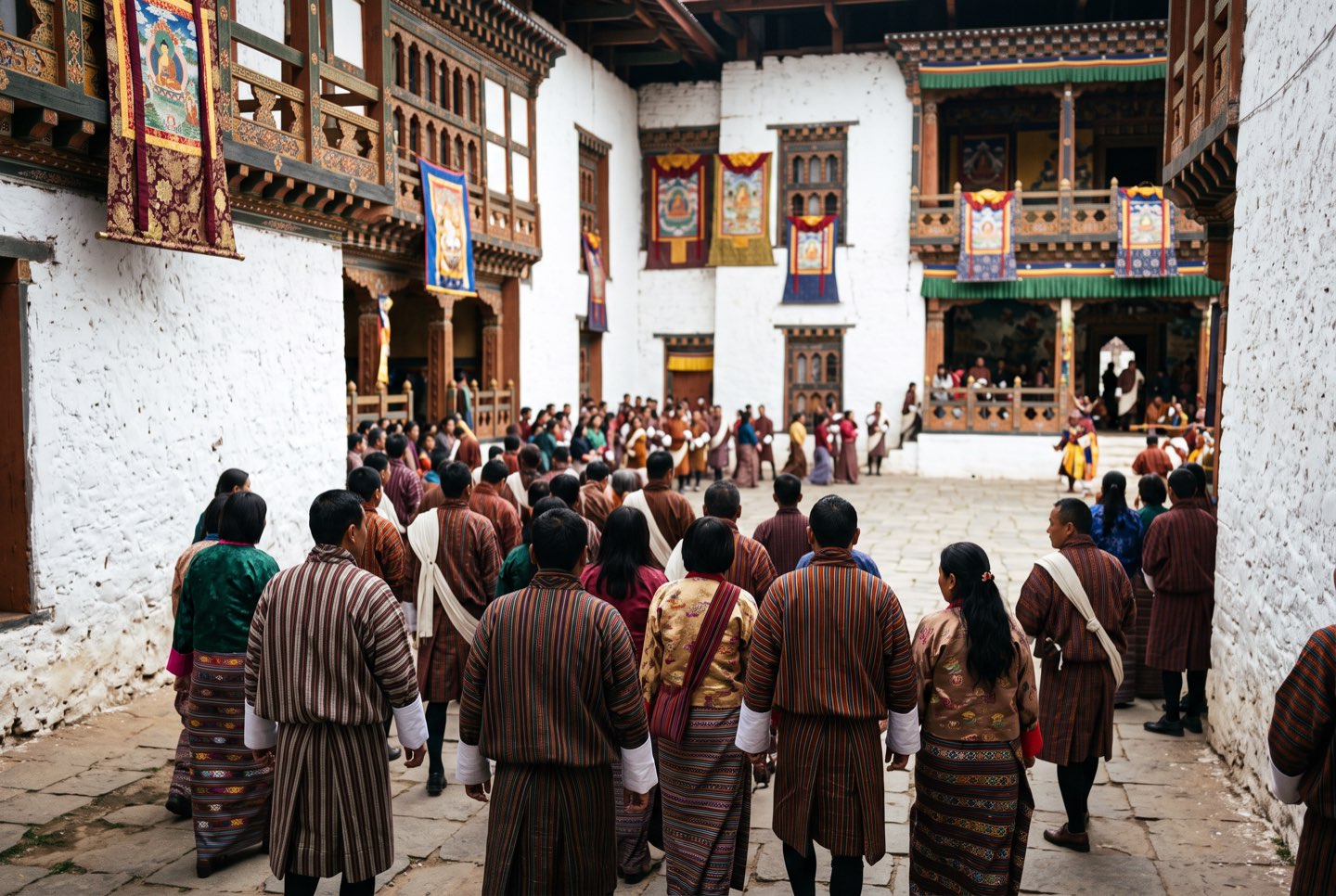 A courtyard fills with families in gho and kira, the national dress, before the first dance of the day.
Why do festival dates move every year?
Because tshechu dates follow the lunar calendar, not the Western one. The national tourism events calendar says so in its header and prints “dates change” beside almost every tshechu. Our guide to Bhutan’s festivals explains the “tenth day” behind the word tshechu.
A tentative list is a best estimate published early, and this one is about nineteen months old. Expect most dates to hold, treat each as a strong guide until closer to the day, and avoid non-refundable plans tied to a single dawn. We reconfirm the dates as your journey approaches.
Which 2027 festivals fall after the SDF window?
Twenty-seven of the 44 entries, everything from the Tour of the Dragon on 5 September onwards, fall after 31 August 2027. That is the date on which BBS reports the current US$100 Sustainable Development Fee is due to be revised, and it takes in every big autumn festival.
BBS reported on 6 September 2026 that no rate beyond August 2027 has been announced and that operators can so far finalise packages only up to the summer of 2027. So for autumn 2027 nobody can tell you the fee yet, and we will not pretend to. We show it as its own line in your proposal, so if it changes, one number moves and the journey does not. Our explainer on Bhutan’s Sustainable Development Fee sets out what is confirmed, and what has changed for Bhutan travel covers the rest of 2026 and 2027.
How far ahead should you book a festival journey?
Earlier than feels natural, but without panic. The same BBS report says the industry sells packages for this long-haul destination two to three years ahead of travel. Paro Tshechu and the weeks of October and November are our busiest, and the most sought-after lodges fill first, as our guide to when to visit Bhutan explains.
A festival is the one thing on a journey that cannot be moved to suit your diary, so when it is the reason for the trip, start the conversation once you know the year. Leave a day or two of slack either side, and we will tell you plainly when a date is still soft.
How do you choose one?
Start with what you want to feel, then let the calendar narrow it. For the dawn thongdrel, look at Paro in March, Gangtey in October, Pemagatshel in November, or Trongsa and Lhuentse in January 2028. For the biggest crowds and most colour, Paro, Thimphu and Punakha. For a village festival where you may be one of few visitors, Bumthang in November.
Then pick a season you would enjoy anyway: March is blossom and long views, as we describe in Bhutan in spring; October and November bring clear skies and full lodges.
Frequently asked questions
Are the 2027 dates confirmed?
Not yet. They are tentative, and dates can still move after a list is published. We reconfirm for your journey and tell you where a date is still soft.
Which festivals end with a thongdrel?
The list marks five for the last day: Paro (22 March), Gangtey (15 October), Pemagatshel (9 November), Trongsa and Lhuentse (both 9 January 2028). A sixth entry, Tharpaling Thongdrol in Bumthang on 20 February, is named for the scroll itself.
Can I see two festivals in one trip?
Yes, when they share a season. Punakha’s Dromchoe (13–15 February) and Tshechu (16–18 February) run back to back, as do Thimphu and Gangtey in October. Festivals in different seasons need different trips.
Will the SDF change for autumn 2027 festivals?
Nobody has said. If you book those dates before an announcement, ask how your proposal treats a change, and keep the fee on its own line so you can see exactly what moves.
A date on a page is only a map. The festival is the cold, quiet moment before the first drum, when the whole courtyard leans in together.